
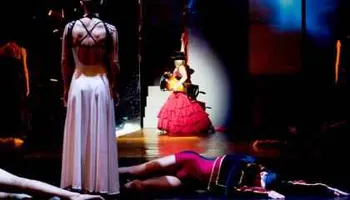
Georges Bizet, Rodion Shchedrin, Deep Forest: CARMEN
The birth of one of the most important works in history was actually preceded by a not very significant short note in a newspaper. It was about a Spanish sergeant who succumbed to the seduction of a beautiful gypsy girl, but ended up as her murderer. This story came to the attention of the eminent writer Prosper Merimée on his tour of Spain in 1830. The master, whose work had often been inspired by the life of the Gypsies, decided to write a novel based on this tragedy. This happened fifteen years later, in 1845. In 1872, another great artist, the composer Georges Bizet, was commissioned to write an opera for the Opéra Comique in Paris. The choice fell on Merimée's passionate story of a young sergeant and an unbridled gypsy.
The powerful dramatic story, the colour of the Spanish setting, the complexity of the relationships and their development, the influence of social conventions, all ending in drama... I like the clashes between the present and history, controversial situations, but also certainties, constants. Shchedrin's music is a certainty for me - a good base for dance theatre. But somehow it lacked for me more earthiness, passion and space for the truth of this deep theme. I searched for a long time until I came across the music of Deep Forest, which filled that very gap in Shchedrin's template. By combining Shchedrin and Deep Forest, I created the ground on which I tried to present Carmen, her passion, earthiness and freedom, and the whole rural community, as convincingly as possible. From the novel P. Mérimée's novella, I condensed the plot, by omitting some of the characters, into the story of four main characters - Carmen, José, Escamillo and Micaela. The catalyst for their plight is the figure of Death. However, the notorious plot of the story remains unchanged in its foundation.
Venue.