
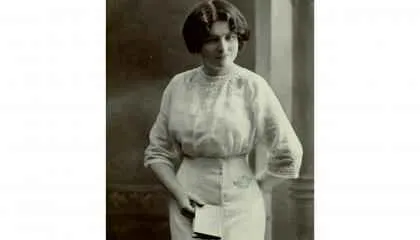
Peter Cibula: HANA, BABA FEMINA
We must protect our pretty women from the false teachings of exaggerated, frivolous feminism from abroad' (Narodnie noviny, 1912).
'I am here at last. Prague! The city in which I will gain my independence.' - Hana Gregorová hopes in 1912, when she leaves for some time the hostile environment of Turčianske St. Martin and her husband Jozef Gregor Tajovský. After stays in Nadlak and Prešov, there is at least a small hope that her ideas will find a proper response in the liberal and cultural centre of Bohemia. Her first book, published recently, caused rather indignation in Slovak cultural circles. Even Vajanský spat before her, saying: Baba femina. After all, she wants so much, only that for women 'the fearful obedience to men - masters - should cease.' If back home, then at least to Bratislava, but all that later. There must still be the madness of war, followed by journalism in Kosice in the new Czechoslovakia. Even Jožko must understand once and for all that not only an educated but also an active woman can contribute to the development of society.
Hana Gregorová - writer, publicist, educator, but above all a woman who was one of the first to point out the difficult position of women in private and in society. Her views irritated the Slovak, mostly conservative intellectual milieu before and after the First World War, not to mention the period of fascism and communism. However, the mental world of Slovakia did not suit her, and she was still drawn to Bohemia, where she moved to visit her daughter after the Second World War. The production is not a documentary record. It depicts the position of an active female protagonist against the background of her complicated partnership with her elderly husband, who rather represents the world of Slovak culture before 1918. The artistic and socio-political framework of the production highlights the turbulent development of Slovakia, in which the position of 'people of culture' often went through difficult trials and moral dilemmas.