
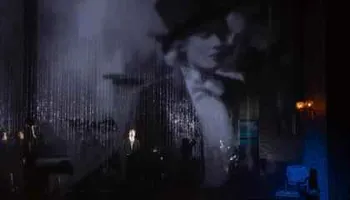
Richard Wagner: TANNHAUER
After almost 65 years, Richard Wagner's romantic opera, Tannhäuser and the Battle of the Wartburg, returns to the stage of the NDKE Opera. Wagner composed this opera during his time in Dresden, where he worked as a bandmaster, and it premiered in 1845. He was inspired by the folk ballad about Tannhäuser, the mythical Venusberg (Venusberg) and the goddess Venus who resides there, who in medieval legend sometimes also appeared as Frau Holda - the Nordic goddess of the underworld Hel.
The opera also features historical figures such as St. Elizabeth of Thuringia (Hungary), Hermann I of Thuringia, the minnesänger Tannhäuser and the German medieval poets Wolfram von Eschenbach and Walther von der Vogelweide. The figure of St. Elizabeth is particularly associated with Slovakia, as according to some sources she was born in Bratislava, where she spent the first four years of her life, and the St. Elizabeth Cathedral in Košice, the largest church in Slovakia, is dedicated to her. Richard Wagner linked these legends and historical figures with the legend of the singing competition at Wartburg Castle (literally Sängerkrieg in German, meaning the singers' war), but he certainly did not aim for historical fidelity. The theme of his opera is the contradiction between sensual and spiritual love, represented on the one hand by Venus and on the other by Elizabeth, but also the ambivalence of modern man, who is torn between opposites and cannot decide between them.
Tannhäuser is the only opera by Richard Wagner that was created in several versions (Dresden, Paris, Vienna). He worked on it his whole life and was not satisfied with its form until the very end (on the eve of his death in Venice he said: "I still owe the world Tannhäuser".) The form of our production will be the so-called Mischfassung - a mixed version of several, where the great ballet music of the Bacchanalia will dominate at the beginning and its theme will be the so-called Wagnerian cult after the composer's death, as well as the life and fate of his only son Siegfried, who was himself a composer, conductor, director and intendant of the Bayreuth Festival.
Location: National Theatre / Historic Building