
TRUMPET PAR EXCELLENCE
Slovak State Philharmonic Košice
Johannes WITT, conductor
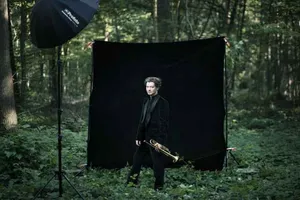
Sergei NAKARIAKOV, trumpet
Programme:
Antonín Dvořák: Othello, Concert Overture, Op. 93 (15´)
Mieczysław Weinberg: Concerto for Trumpet and Orchestra in B flat major, Op. 94 (24´)
=intermission =
Ralph Vaughan Williams: Symphony No. 5 in D major (35´)
Dvořák's overture to Othello is quite distant from the traditional idea of the sonata form because of its connection to a specific literary subject. This is also related to the overall character of the composition, which is rather epic in character with many moody twists and turns and an overall dramatic effect. Although the work cannot be regarded as a faithful musical transcription of Shakespeare's tragedy, certain parallels can be discerned in its individual movements. In the area of exposition, it concerns the character of Iago and his intrigues by which he sows doubt into Othello's soul. The extensive lyrical area in the exposition can then be understood as a love duet between Othello and Desdemona. The dramatic and spectacular denouement, which is built on an elaborate harmonic plan and works with bizarrely distorted variants of the initial thematic material, presents scenes of Othello's jealousy culminating in the murder of Desdemona. The reprise is a picture of remorse, grief and wrenching memories of former happiness.
Mieczyslaw Weinberg's 1967Concerto for Trumpet and Orchestra in B flat major is one of his most remarkable works. Its effects range from pointillist modernism to striking rhythmic textures, full of grotesque and sarcastic undertones. Although the movement titles suggest fragmentation and playfulness, in many ways they are belied by the music itself, whose strong sense of continuity and nervous tension led Shostakovich to call the work a 'symphony for trumpet and orchestra'.
The English composer Ralph Vaughan Williams wrote his Symphony No. 5 in D major in 1938-43. Stylistically, it represents a departure from the harsh dissonances of his Symphony No. 4 and marks a return to the gentler style of his earlier Pastoral Symphony. Several of the musical themes in Symphony No. 5 comefrom his then unfinished operatic work, The Pilgrim's Progress. The work was a huge success at its premiere.