
SHOSTAKOVICH IN ORAVA
Košice State Philharmonic
Eduardo STRAUSSER, conductor
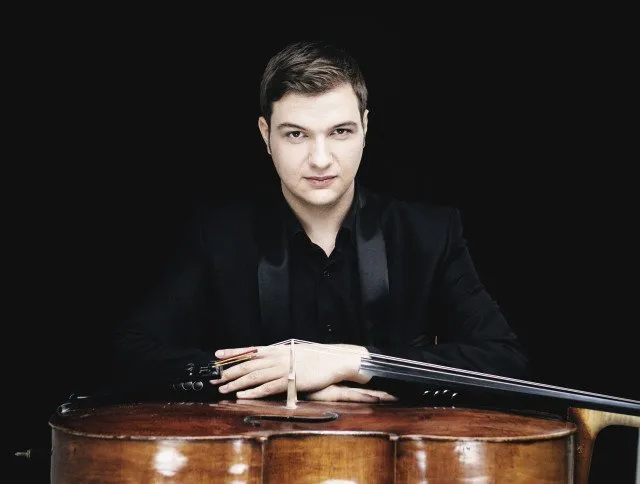
Andrei IONIȚĂ, cello
Program:
Wojciech Kilar: Orawa 9'
Dmitri Shostakovich: Cello Concerto No. 1 in E-flat major, Op. 107 28'
— intermission —
Sergei Prokofiev: Symphony No. 7 in C-sharp minor, Op. 131 32'
The symphonic poem *Orawa* from 1986 is the final part of Wojciech Kilar’s loose “Tatra Cycle” of four orchestral works. All the movements reflect the composer’s fascination with Goral music and its extraordinary vitality, which is evident in its characteristic rhythms, original melodies, and distinctive musical expression. The work is written for string orchestra and represents a kind of fusion of folk music with elements of musical minimalism. The composition is built around a single central, rhythmically pulsating motif. The static introduction gradually transforms into a spontaneous and hypnotic mass of sound. The rhythmic intensity and energy steadily build, and the piece culminates in an ecstatic finale. Orawa captivates with its immediacy, thrilling tempo, and uncompromising energy.
Dmitri Shostakovich wrote his Cello Concerto No. 1 in E-flat major, Op. 107, in 1959 for the outstanding cellist Mstislav Rostropovich. The work almost immediately became one of the cornerstones of the 20th-century cello repertoire. The concerto was composed during a period when Shostakovich’s musical language once again became significantly more relaxed and acquired greater personal immediacy. Despite the relatively small orchestral ensemble, the work possesses extraordinary sonic and emotional intensity. Here, Shostakovich masterfully exploits the contrast between grotesque irony, kinetic energy, sarcasm, and deeply concentrated lyricism.
Sergei Prokofiev’s creative legacy is capped by Symphony No. 7 in C-sharp minor, Op. 131, which is the composer’s last completed symphonic work. Prokofiev composed it in 1952, just one year before his death, at a time when he was already struggling with failing health and facing relentless pressure and censorship from Soviet authorities. Although the work was originally commissioned by the children’s department of Soviet state radio, its conceptual depth far exceeds childlike simplicity. The clarity of form and apparent neoclassical lightheartedness cannot entirely conceal the deeper, melancholic tones and nostalgia for a life now past.